Best Time to Visit Kampot
By Jason for Discover Kampot Last checked:

The main tourist season is from January to April, during the hot and dry season. While this is perfect beach weather, it misses out on what makes Kampot great: the countryside.
Once the early rains start in May and June, the countryside comes alive, rice fields are sown, and fruit, especially Kampot’s famous durian, fills the markets. July through September can be marked by the occasional heavy storm and flooded roads, but country life is in full swing, and the whole area turns green.
October to December is the best of both worlds: the rains have stopped, rice is being harvested, and the countryside is still green. By January the heat has returned, dust fills the air, and everything is brown, waiting for the rains to return.
Dry Season: November to April
November to January
For most tourists, these are the best months to visit. The rains have stopped. The temperature is pleasant, and the countryside is still lush.
It’s also harvest time. The rice fields are full of golden paddies, as families cut, bundle, thresh, and dry the year’s rice, often still using traditional methods.

The northeastern winds of November drive away the clouds and also mark the start of kite season. The skies are dotted with homemade kites children build from discarded plastic, bamboo, and fishing line. Kiteboarding season has started, and Kampot offers some of the best conditions around.
It’s also time for one of Cambodia’s most important festivals, Bon Om Touk: boat races, floating lanterns, and big crowds. Phnom Penh is the centre of it, but Kampot has its races on the riverfront as well.
February to April
The temperature starts rising in February as the winds fade. By April it can easily get into the high 30s. The fields are brown, the jungle is dry, and farmers are burning off the old rice stubble in the fields. While it’s not the best time to visit Kampot, the dry season does have some things going for it: both pepper and salt are being harvested, and local palm sugar farms are in full swing. Start your days early, take a long break by the pool at mid-day, and head back out in the late afternoon.

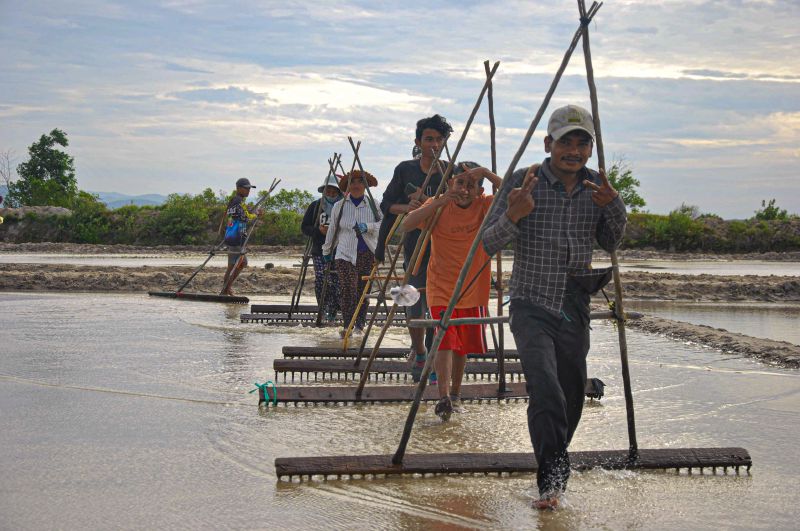
The salt fields are at their best from January through April. Workers move across the shallow pans before dawn, raking the salt into white piles, the water reflecting the sky so it looks like they are collecting clouds. Most visitors stop at the roadside for a photo; the Salt Field Community Tour takes you in to meet the families who work the pans and see some of the projects helping support them.

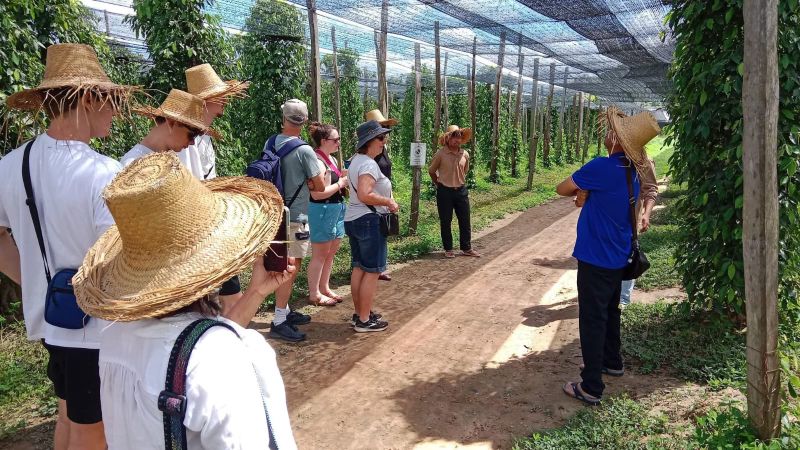
The pepper harvest runs February through April. The farms are open year round, but this is when you see the full operation: vines heavy with bunches, workers picking by hand, peppercorns drying on mats in the sun. Kampot’s pepper farms aren’t all the same, so check our pepper farm guide to see how they differ.
Palm sugar is made throughout the dry months. Men climb the palms barefoot to collect sap from the cut flowers, then boil it down by hand over wood fires with nothing added. While there are no farms open to the public, Jason’s Countryside Experience makes a stop at a local, family-run palm sugar farm.

The one thing that makes the heat worthwhile is Khmer New Year, in mid-April, the biggest holiday in the Cambodian calendar. Families return from the cities, music plays from the pagodas, and water gets thrown in the streets in a huge water fight. It’s more than a party: the rains are close, and the countryside is about to turn green again.
Rainy Season: May to October
May to July
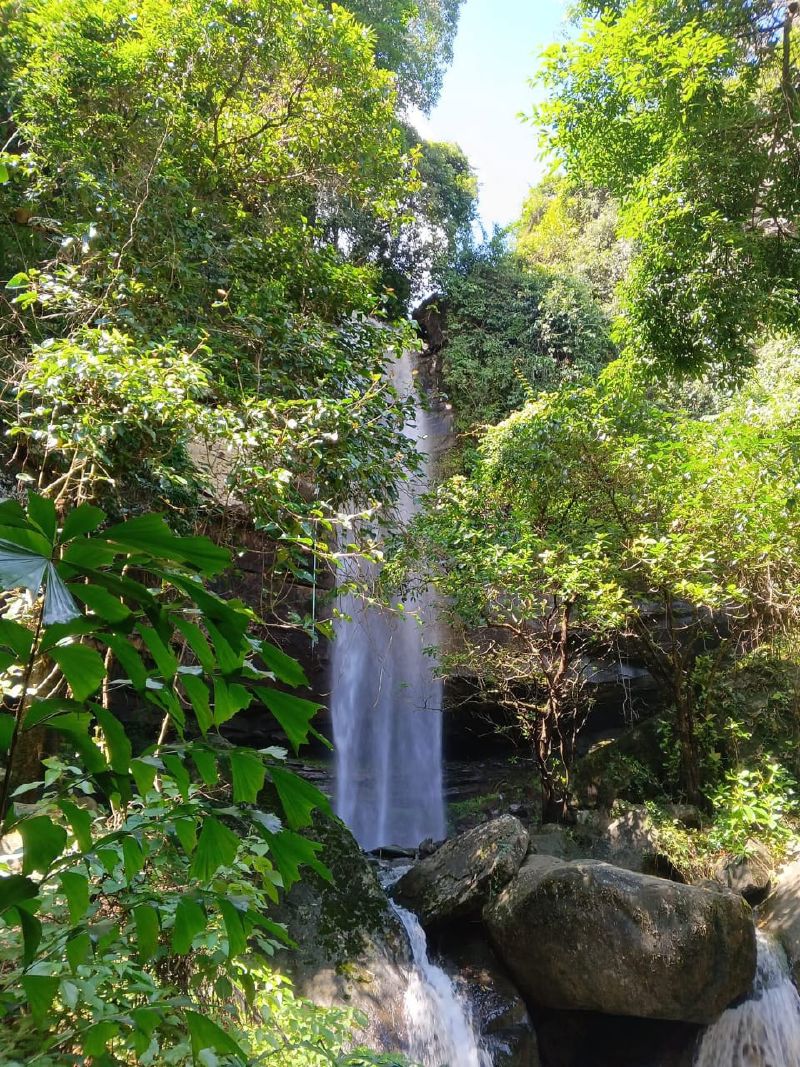
As the Khmer New Year ends, the first of the rains arrive and bring the country back to life. These first, light rains are called the ‘Mango Rains’ because the fruit season starts, and the markets fill with local tropical fruit. The days are still sunny and warm, with a welcome drop in temperature and short bursts of rain most evenings. The dust disappears, the hard-packed mud of the rice fields softens, and farmers start to prepare for the start of the rice season. The waterfalls start flowing, and the colours everywhere change from brown to green.

Perhaps most importantly, it’s durian season. Kampot has been renowned for its durian since at least the early 19th century. Back then, Kampot was home to royal gardens that would supply durians to the royal families. Today, the famous Durian Roundabout celebrates the fruit, and Kampot durian is still considered one of the best in Southeast Asia. By June, you can find it almost everywhere. You just need to follow the smell.
The rice fields that surround Kampot are now filled with bright green baby rice, and by June, that starts getting transplanted into the main fields.

Everywhere, Cambodians go through the fields, knee-deep in water, bent forward in rows to replant the young shoots by hand. Within weeks, the fields turn a heavy green stretching to the hills, water buffalo wallow in the flooded paddies, egrets pick along the edges, and the lotus ponds bloom.

August to October
By August the rainy season is at its peak. Although most days are still sunny with evening thundershowers, cyclone season arrives and you might get stuck in a few days of heavy rain.
This is also one of the best times to go out to Kampong Trach. The limestone cliffs there look their best when they are ringed by green rice fields, and it is one of the most picturesque landscapes in the province.


The big observance now is Pchum Ben, usually September or October. For fifteen days the spirits of ancestors are believed to wander, and families gather at pagodas before dawn to leave food offerings on their behalf. Pchum Ben isn’t a celebration and doesn’t have much of a public side. Cambodians return to their home villages, and will visit pagodas early in the morning with their families, often before dawn, to perform the ceremonies. If you’re curious and stop by a pagoda in the morning, Cambodians are sure to welcome you and let you get involved.
Kathin is the next holiday this time of year, occurring in late October or early November. It’s the end of the monks’ rainy-season retreat, and Cambodians bring gifts for the monks, generally new robes and toiletries, to help them freshen up after their retreat. Processions of people enter the pagodas with golden gifts carried on their heads. Just like Pchum Ben, this isn’t much of a public festival, but if you stop by a pagoda, you’ll be more than welcome to take part.

Many of Cambodia’s most important dates follow the Buddhist lunar calendar, so they shift every year. Check the official Cambodia public holiday calendar if you are timing a trip around one.
By November, the rains have stopped, the rice harvest is finishing up, and the cycle is ready to start again.
Further reading

How Long Should You Stay in Kampot?
How long to spend in Kampot, from one day passing through to a week of side roads, local spots, and not wanting to leave.
Kampot Pepper Farms: Which One Should You Visit?
Trying to choose between La Plantation, BoTree, Sindora, and Sothy's Pepper Farm? Here's how Kampot's best-known pepper farm visits compare.