See & Do · Travel guide
Kep Day Trip
A quick coastal escape from Kampot for crab market seafood, sea views, a national park walk, and an easy boat to Rabbit Island.
- Time neededHalf day
- MapOpen map ↗
Kep is close enough to Kampot for lunch at the crab market and a walk by the sea. Stay longer and you can hike in the national park, take a boat to Rabbit Island or explore the countryside between the two towns.
The crab market and Kep beach
Most people come to Kep for the crab market. Order fresh crab with Kampot pepper and find a seat at one of the stalls. Lunch is the busiest time.
After lunch, head to Kep beach for a walk or some time by the water.
Kep National Park
An 8km trail loops around Kep National Park, with views over the coast and islands. Allow two to three hours for the full walk. There are also trails to Sunset Rock if you want a shorter outing. The paths are easier in the dry season and can get muddy in the rains.
Rabbit Island
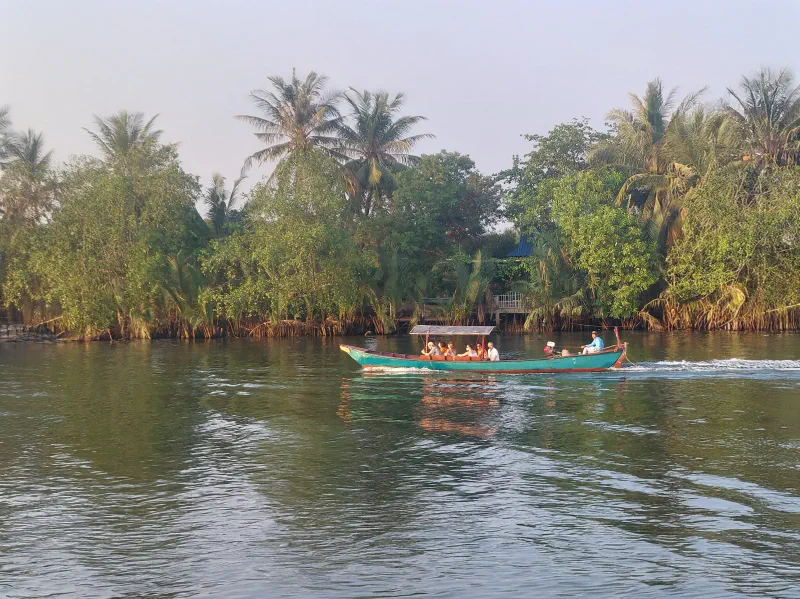
A boat to Koh Tonsay (Rabbit Island) leaves from Kep pier. It’s a short ride to a quiet beach with hammocks and basic food. Allow at least half a day for the island, including the boat crossing.
More places to visit
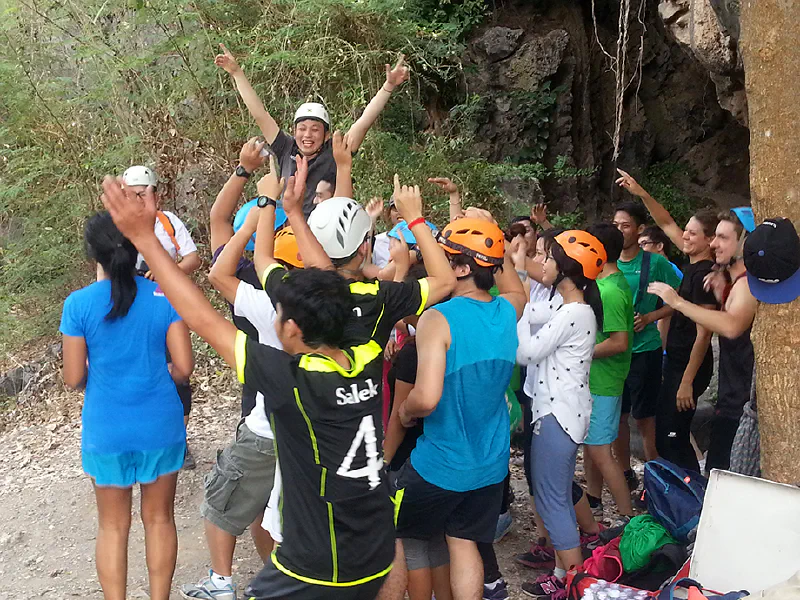
Kep Adventure Park has a high ropes and zip line course through 21 large trees on Kep Mountain. There are views over the water, occasional monkeys and a cafe at the end. Allow around an hour and a quarter. It’s an option for families or anyone after something more active.
Vipassana Dhura Kep (វត្តសមាធិ) is a meditation pagoda above town, with quiet grounds where you can sit and meditate on your own.
The Kep salt fields are smaller than the salt fields near Kampot. Both were used as forced labour sites under the Khmer Rouge, and a rare film made in Kep captures what the fields looked like then. You can watch it on YouTube before you visit, which makes the then-and-now comparison worth sitting with. The fields are only active in the dry season.
A little history
The name Kep is usually traced to the Khmer word for saddle, a reference to the rocky hills that give the headland its profile. Before the French arrived, it was a Hainan Chinese trading and pepper-growing settlement. The French built a coastal bungalow station here, which opened to the public in 1917, and by the 1950s and 60s Kep had grown into a fashionable resort for Cambodia’s ruling class. The modernist villas from that era still line the waterfront, most abandoned, some slowly coming back.