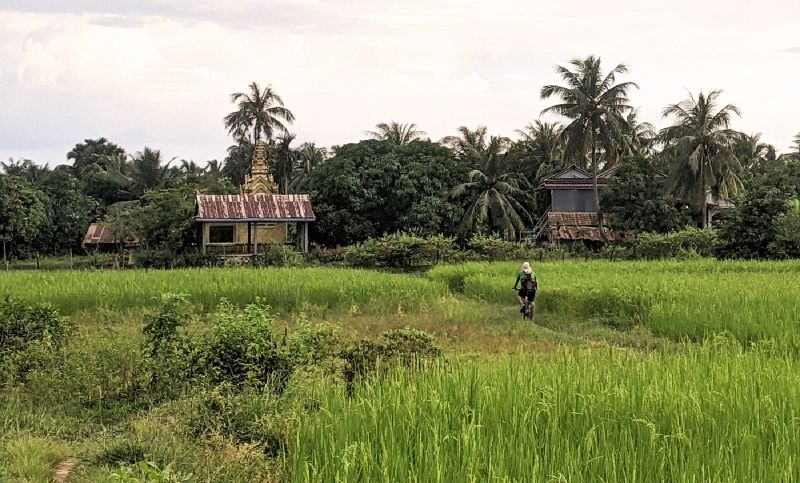
Kampot Pepper Farms: Which One Should You Visit?
Trying to choose between La Plantation, BoTree, Sindora, and Sothy's Pepper Farm? Here's how Kampot's best-known pepper farm visits compare.

From ancient 6th-century roots to wartime collapse and the modern PGI revival: how Kampot pepper came back, and how to choose which farm to visit.
Pepper has been part of life in this corner of Cambodia for at least 1,500 years. In a 6th-century inscription found at the Phnom Chhnork cave temple outside Kampot, a list of temple servants includes a man named Maric, the Sanskrit word for black pepper.
Mass commercial cultivation in Kampot began in the 1840s, when Hainanese Chinese immigrants settled the coastal foothills. When French administrator Adhémard Leclère surveyed the province in the 1890s, he found an industry of over a thousand planters tending hundreds of thousands of vines climbing three-metre hardwood stakes. Supported by French tariff breaks in the 1890s, it grew into a major export commodity traded through Marseille and French colonial ports.
Decades of civil war and the Khmer Rouge regime nearly wiped it out. Cash crops were outlawed, plantations were abandoned for forced rice production, and hardwood pepper posts were pulled down for firewood. By 1979, commercial pepper farming in Kampot was virtually extinct.
The turnaround started in the late 1990s as local families replanted old vines, but the modern industry found its footing after 2006. That was when Kampot-based Farm Link began organizing scattered smallholders, introducing strict processing and hand-sorting standards, and securing international buyers. That work helped establish the Kampot Pepper Promotion Association and, in 2010, secured Cambodia’s first Protected Geographical Indication (PGI).
Several farms around Kampot welcome visitors, from large flagship estates down to small family-run setups.
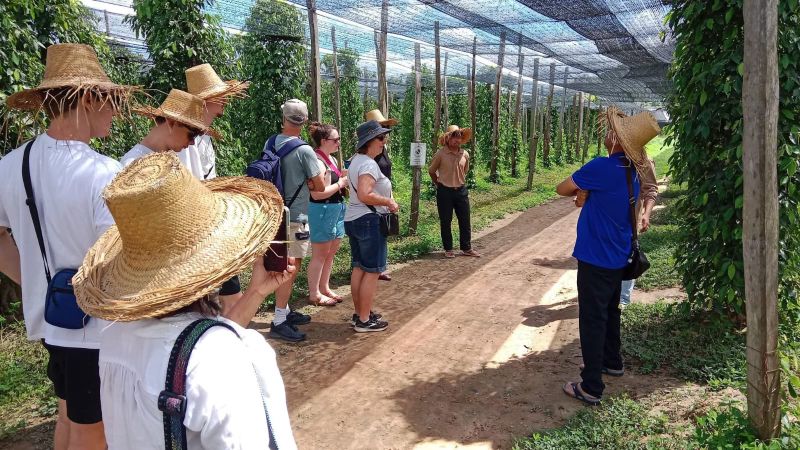
At almost every farm, you will do roughly the same thing: walk through the vines to see how the plants grow, learn how one berry becomes black, white, red, and green pepper, and then sit down to taste them side by side.
The tours cover the same basics, but the farms themselves could not be more pleasantly varied. Whether you prefer the full amenities and dining of a large, well-established estate or the personal warmth of a small family farm with lunch by a pond, Kampot has great options for both.
If you are trying to figure out which one fits your day, we put together a guide comparing the options:
Kampot Pepper Farms: Which One Should You Visit?

Kampot, as locals see it.
There's more to Kampot than you expect.
Discover Kampot is made by people who live here. Read local stories, find somewhere new to go, or choose a local experience.
Further reading
Trying to choose between La Plantation, BoTree, Sindora, and Sothy's Pepper Farm? Here's how Kampot's best-known pepper farm visits compare.
Kampot has more going on than most visitors ever discover. Here's where to look.
Should I tip my tuk-tuk driver?
If you've negotiated a price with a tuk-tuk driver, you can consider that tip included. However, if you're using an app like PassApp or Grab, be aware those prices are competitive, commissioned, and not very profitable for the drivers. A generous tip on the already small fee will probably be appreciated and help out a lot.